
October 7, 2026

In Part 1 of this series, we looked at two clinical trials that “failed” their clinical endpoints using established biomarkers and explored the concepts around biomarker use in research. In Part 2 we dug deeper into whether or not the right questions are being asked, and if the right biomarkers are being used to answer them. In this 3rd and final installment, we investigate how timing may shape therapeutic success, and why preserving health is a different challenge from trying to repair irreversible damage.
Medicine is very good at measuring loss. We can measure how much strength someone has lost. How far cognition has declined. How much kidney function has deteriorated. How many cardiovascular events occurred. How much tumour burden progressed. These endpoints represent consequences patients actually experience. But there is a vital question hiding underneath them.
By the time the endpoint changes, how much has already gone wrong?
For many chronic diseases, the process begins years, sometimes decades, before the conventional clinical phenotype becomes obvious. Molecular pathways change. Cells adapt. Compensatory mechanisms hold things together. Tissue function begins to deteriorate. Eventually those compensatory mechanisms are no longer enough, and the loss becomes visible. That is often when we diagnose the disease, but it may also be when the condition is harder to reverse.

This seems obvious when stated plainly, yet it has profound implications for therapeutic development. A treatment capable of preserving healthy tissue is not necessarily capable of recreating tissue that has already been lost. For example, there are no known mechanisms for recreating lost neurons in humans, and even if we could, the synapses and memories those neurons had mapped are long gone. Similarly, a therapy that prevents cellular dysfunction may not be able to restore an organ after substantial structural damage. For most diseases, there is a tipping point where loss is irrecoverable with current medicine.
Stabilizing an early disease process and reversing advanced disease are fundamentally different biological challenges.
Alzheimer’s disease offers an instructive example. In the Phase III TRAILBLAZER-ALZ 2 trial, donanemab slowed clinical progression in early symptomatic disease, with a greater effect in participants with low or medium tau burden (less advanced disease). On the integrated Alzheimer’s Disease Rating Scale, progression slowed by 35.1% in this group, compared with 22.3% in the overall population, which included participants with high tau. The investigators concluded that amyloid-lowering therapy may offer greater benefit when initiated earlier in the disease course [1].
That does not mean earlier treatment will always work, nor does it resolve the many questions surrounding Alzheimer’s biology. But it illustrates that changing the trajectory before extensive disease accumulates may be easier than rebuilding what has already been damaged. The idea isn’t confined to neurodegeneration.

Cardiometabolic medicine has spent decades moving upstream. We treat hypertension before stroke. We lower LDL cholesterol before myocardial infarction. We identify dysglycaemia before the complications of diabetes appear. Other areas of medicine also pursue prevention through immunization, screening, risk reduction, and early treatment. But few have a mature clinical infrastructure for acting on measurable, modifiable risk years before irreversible disease. Too often, the biomarkers we rely on emerge too late, after pathology is established, and all that is left is progression mitigation and disease management.
That timing question has certainly been posed with respect to the two trials that opened this series. Lp(a)HORIZON and ZEUS both enrolled people with established cardiovascular disease, often with years of accumulated atherosclerotic plaque [2, 3]. Lowering Lp(a) or blocking IL-6 in that population is asking those pathways to reverse damage that took decades to build. The available topline data cannot confirm that disease stage was the deciding factor in either trial. But it seems a more plausible explanation than concluding that Lp(a) and vascular inflammation have nothing to do with cardiovascular disease. It is also the kind of question this series keeps returning to: not whether the biomarker measured something real, but whether we were measuring the right indicator at a time where intervention might plausibly change the course of the disease.
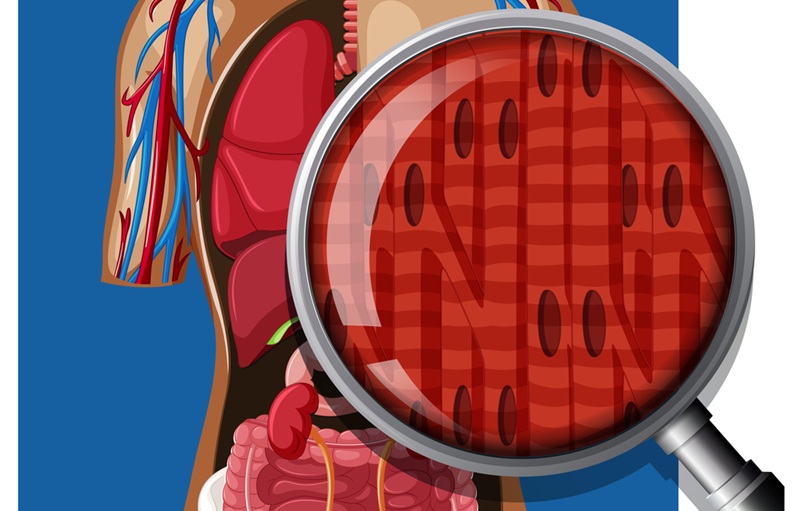
Skeletal muscle is usually judged by what we can see or readily measure: how much muscle is present; how strong it is and what a person can physically do. But these important outcomes sit relatively far downstream of disease.
Muscle mass does not suddenly disappear one morning. Before substantial tissue is lost, changes may already be occurring in mitochondrial energetics, protein turnover, neuromuscular communication, structural integrity, vascular supply, regenerative capacity and the signalling relationships between muscle and other tissues.
In The Hallmarks of Skeletal Muscle Health, we proposed that muscle health should be viewed through seven interconnected biological hallmarks rather than reduced to a single measure such as mass or strength. The aim is not to replace functional outcomes. It is to measure and understand the biology that produces them and potentially identify deterioration while those underlying processes are still modifiable [4].
That becomes particularly important if the therapeutic goal is preservation.
If we wait until meaningful muscle mass has disappeared, the clinical question becomes: can we rebuild it?
However, if we detect impaired mitochondrial function, altered proteostasis, denervation or another pathway-specific defect earlier, the question becomes: can we correct the biology and prevent that mass from being lost in the first place?
Prevention and repair are very different treatment problems. We have spent enormous effort trying to reverse advanced phenotypes such as sarcopenia, cachexia and muscle wasting. Perhaps some of the difficulty reflects the stage at which we are trying to intervene. You cannot necessarily infer that an intervention capable of maintaining a healthy fibre will also regenerate one that has already disappeared. Accordingly, blocking degradative pathways after muscle has atrophied may slow loss but it cannot bring back what has already been lost.

Of course, moving upstream carries its own risks. The earlier we measure, the further we may be from an outcome the patient can actually feel. A molecular abnormality can exist without ever progressing to clinically significant disease. Detecting biological change earlier can lead to overdiagnosis, unnecessary treatment and years of anxiety if we do not fully understand the pathways, genetic and lifestyle risk factors and environmental impacts. And a pathway-specific biomarker is only useful if we know what the change means and, more importantly, what to do with it. This is why early detection cannot simply become a race to find the first measurable abnormality. It has to be paired with biological understanding and a proven treatment approach.
Many questions must be answered before a marker becomes clinically meaningful:
But the fact that early markers require validation is not an argument for waiting until late disease. It is an argument for doing the work required to connect early biology with later outcomes, so that treatments are targeting the right biological processes at the optimal time.

This creates an interesting problem for drug development. Suppose an intervention is designed primarily to prevent deterioration. A traditional trial may enroll people who already have substantial established disease because they are easier to identify, progress faster and generate measurable clinical endpoints sooner. From a trial-design perspective, that makes sense. Biologically, however, it may select exactly the population least able to respond. Conversely, enrolling earlier disease may produce a population in whom decline occurs slowly. That means larger trials, longer follow-up and greater cost. The endpoint may barely move because the intervention is doing precisely what it is meant to do: preserving function. Prevention creates a strange measurement challenge where success can look like nothing is happening.
This is where well-validated mechanistic, physiological and intermediate measures become extremely valuable. They can help establish whether disease biology is changing during the period before a gross functional difference becomes measurable.
But, returning to Part 1 of this series, we cannot simply assume that changes in biomarkers guarantee clinical benefit. The solution is not to choose upstream biology or downstream clinical outcomes, but rather to connect them.

There is another reason to connect multiple layers of evidence when using biomarkers: a treatment can improve how someone feels or functions without slowing the disease responsible for those limitations. Symptomatic benefit and structural harm can coexist within the same treatment programme.
Tanezumab offers a cautionary example. Developed to treat osteoarthritis pain, this antibody blocks nerve growth factor, a mediator of pain signalling. Trials demonstrated dramatic improvements in pain and physical function. However, because pain was so significantly inhibited, treated participants overused joints, resulting in a higher incidence of rapidly progressive osteoarthritis, halting the trial, and ultimately causing the product to be abandoned.
Pain relief is an important outcome, but less pain does not necessarily indicate that a joint is being preserved, just as better function does not, by itself, establish that the underlying disease process has slowed. If the therapeutic goal is preservation, we need evidence of preservation, alongside measures of symptoms, function and safety. Otherwise, an endpoint can move in the desired direction while the disease moves in the wrong one.
Much of clinical medicine still relies on snapshots. A laboratory value. A strength test. A scan. A functional score. But disease is a trajectory and measurement should allow us to understand where a person sits along that trajectory: what biology has begun to change, what tissue remains intact, which processes are potentially reversible, and what downstream outcome we are trying to prevent or improve. That may require several layers of evidence rather than a single “best” endpoint to measure treatment success.
At the molecular level: are indicators in a relevant pathway normalizing? At the tissue level: are we seeing preservation or restoration? At the functional level: is performance improving ? At the patient level: is the treatment translating into a life that is healthier, longer or less limited by disease?
The further upstream we can intervene with confidence, the greater the possibility that we stop measuring loss and start preventing it.
That is ultimately why endpoint selection is not just a statistical or regulatory exercise. It reflects how we believe disease unfolds. If we define disease only by its most visible downstream consequences, we may spend our time trying to unsuccessfully repair damage that has been accumulating quietly for years. The next generation of diagnostics and therapeutics should aspire to something better: identify the biology early enough to understand it, measure it precisely enough to target it, and intervene while there is still health left to preserve.
Sometimes the most meaningful endpoint is the one that never gets the chance to change.
References