
September 24, 2026
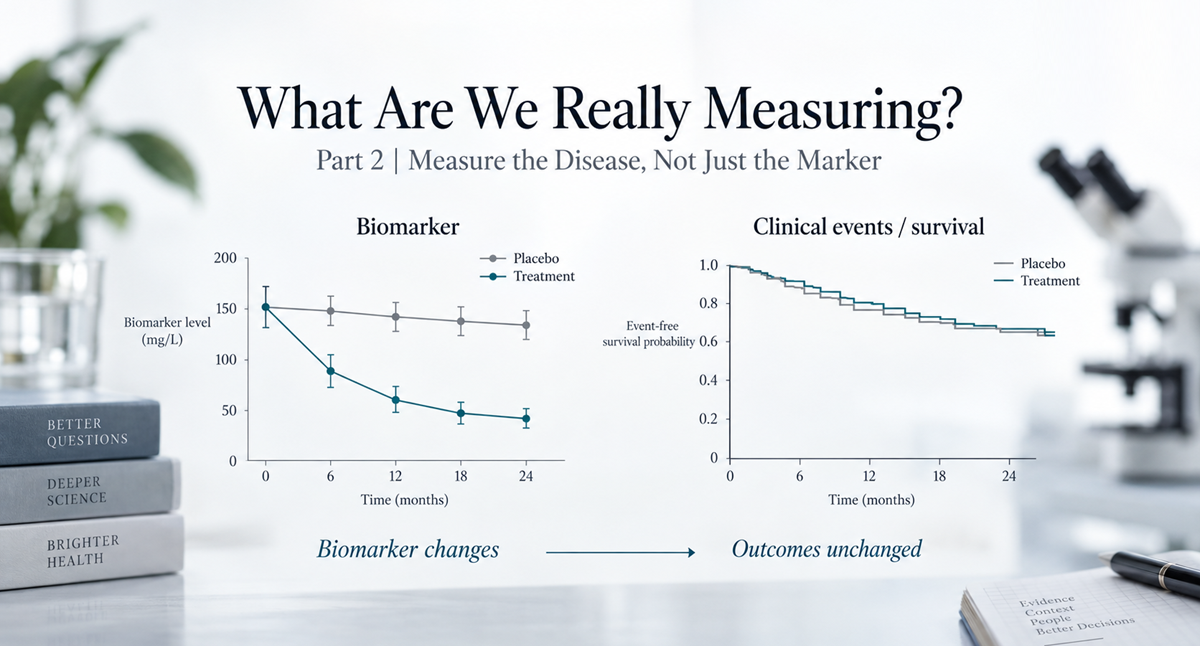
In part 1 of this series, we discussed how two separate clinical trials reduced cardiovascular-associated biomarkers but didn’t reduce cardiovascular events or death in the trial populations [1, 2]. While speculation abounds over the perceived “failure” of these trials, the important underlying question often gets missed or unanswered: What exactly is a biomarker telling us? It sounds simple, right? But it’s not. Too often the focus is on whether the biomarker is statistically associated with disease or easy to measure, and whether a treatment can alter it significantly in a clinical trial.
The question we should be focussing on is, “What part of the biology does this biomarker actually capture?”
That question came up repeatedly in Eric Topol’s recent substack discussion of these two failed trials [3]. His analysis of the ZEUS trial is particularly interesting. Participants were selected because they had atherosclerotic cardiovascular disease, chronic kidney disease, and elevated high sensitivity c-reactive protein (hsCRP) levels. The study targeted hsCRP, a circulating marker of inflammation that has been associated with increased cardiovascular disease risk. Ziltivekimab successfully inhibited the inflammatory cytokine interleukin-6 (IL-6) pathway and lowered hsCRP, yet cardiovascular outcomes did not improve [2]. This calls into question whether inflammation is as relevant to cardiovascular outcomes as previously thought.
Topol argues that we should not interpret these results as “inflammation is irrelevant to cardiovascular disease”, but that hsCRP and circulating IL-6 may be poor measures of the specific inflammation that matters: inside the coronary arteries. Since IL-6 and hsCRP are systemic markers they can be elevated for many reasons, including chronic kidney disease, infection or inflammation elsewhere in the body.
There is now a way to assess coronary inflammation much more directly using the fat attenuation index, or FAI, derived from coronary CT imaging, and it highlights a real disconnect with hsCRP. Topol cites data in which the correlation between hsCRP and coronary FAI was only r=0.2 (for the uninitiated, that is a weak/very weak correlation) [3]. In another study, 63% of screened participants had evidence of coronary inflammation by FAI despite a median hsCRP of just 0.8 mg/L, a value that would normally be considered low [3].
If the question is “does this person have systemic inflammation?”, hsCRP may be useful. If the question is “is this person’s coronary artery inflamed?”, it may not be enough. Same biomarker, different questions. Even then, we need to be sure the biomarkers we target are actually playing a causal role in the disease and aren’t just a by-product of another biological process.

Alzheimer’s disease is another area where biomarker targets have missed their marks. Plasma phosphorylated tau 217, or p-tau217, has emerged as one of the most promising blood biomarkers that can provide substantial information about underlying Alzheimer pathology and future risk.
A 2026 JAMA study pooled data from 2,684 cognitively unimpaired adults across six cohorts. Higher baseline p-tau217 was strongly associated with progression to cognitive impairment. Each 1-standard-deviation increase was associated with a 38% increase in risk, and people with very high p-tau217 had a 38% absolute risk of progressing within five years. Higher levels were also associated with faster cognitive decline [4].
For managing risk of disease progression, it appears to be a very useful biomarker. But whether it can be used to measure treatment effectiveness is a totally different question. A separate 2026 analysis of the Phase III TRAILBLAZER-ALZ 2 trial asked whether plasma p-tau217 could determine whether donanemab treatment had successfully cleared amyloid from the brain. Among 830 treated participants, its performance was poor: the area under the ROC curve was just 0.61 at 52 weeks. The investigators concluded that p-tau217 could not currently be used to accurately identify treatment-related amyloid clearance measured by PET [5]. The easy conclusion would be that p-tau217 is a poor biomarker. But it clearly is not. p-tau217 appears to be highly informative for some questions and inadequate for others. That is a much more useful way to think about biomarkers.
Another Alzheimer’s biomarker, amyloid-beta (AΒ) has long been associated with disease progression, with many suggesting it plays a causal role in the disease. But a recent systematic review and meta-analysis in Annals of Family Medicine found that despite anti-amyloid monoclonal antibodies successfully clearing AB plaques, they produced clinically negligible improvements in cognition and function, with none crossing the minimally clinically important difference threshold [6]. That pattern raises an important question: if a therapy reliably removes the target and the disease keeps progressing largely unabated, is it possible that amyloid-beta is better understood as a biomarker that tracks disease progression rather than a true causal driver of it? Like p-tau17 it may be a measure of severity but have little impact as a target for therapy.
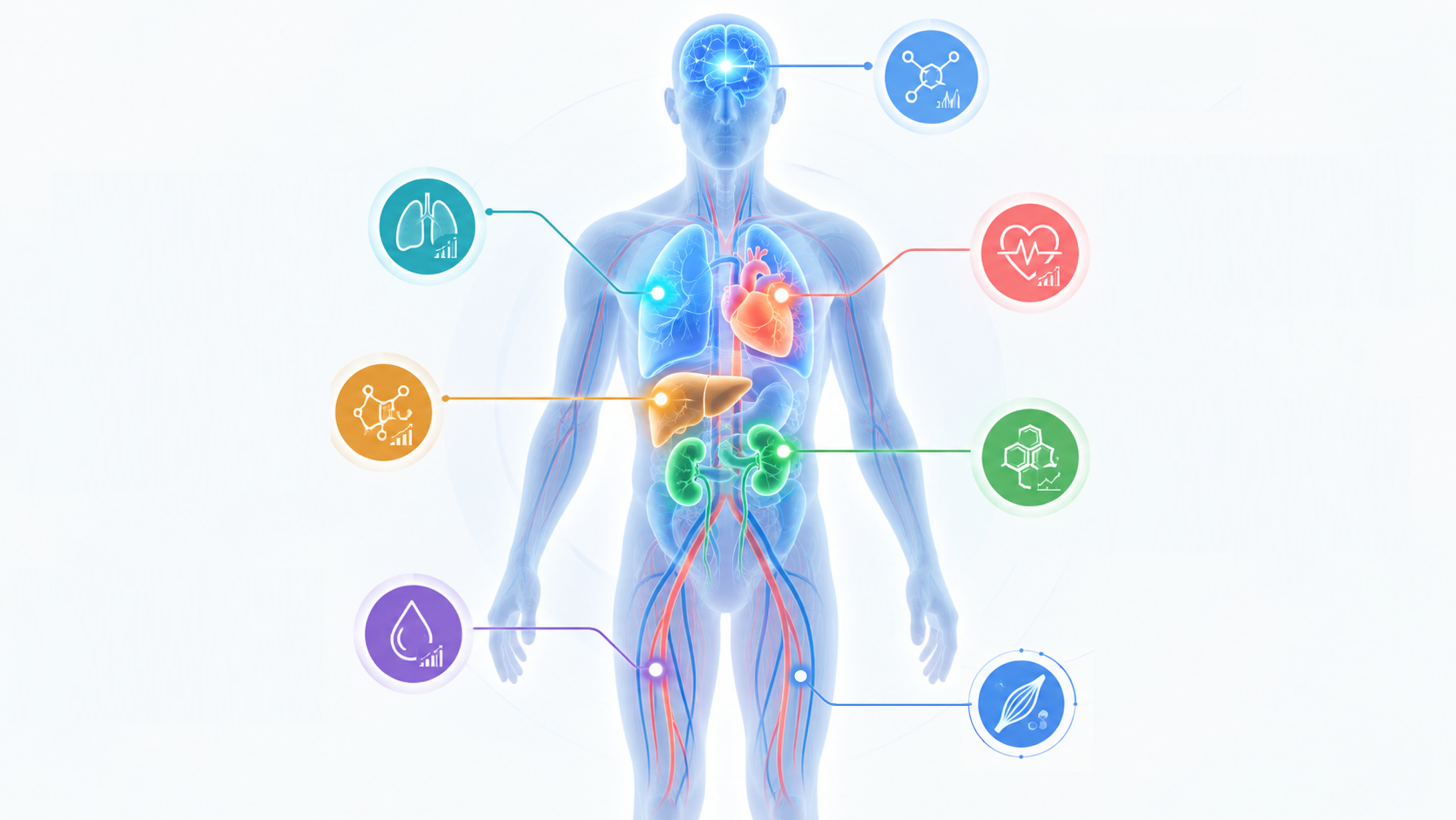
We often talk about “the biomarker” for a disease as though somewhere there is one perfect number capable of summarizing everything we need to know. Most diseases are not that simple. A marker might be useful for identifying disease before symptoms develop. Another may help determine prognosis. Another may identify a mechanistic subtype of disease. Another can demonstrate that a therapy engaged its molecular target. Another may monitor biological response. And only some will be sufficiently validated as drivers of clinical outcomes. These are not interchangeable functions.
A biomarker can be excellent for diagnosis and poor for treatment monitoring.
A biomarker can predict future disease without being causally involved in that disease. It can accurately reflect one component of pathology while missing another. It may work extremely well at a population level but poorly enough at an individual level that it cannot guide a treatment decision. Even the location of the measurement matters. Blood is convenient. Tissue usually is not. But convenience can create distance from the biology we actually want to understand.
A circulating inflammatory marker may not tell us what is happening inside an artery. A blood marker associated with brain pathology may not tell us whether amyloid has been cleared after treatment. And a whole-body or gross functional measure may tell us that tissue has deteriorated without identifying which cellular process is responsible. The closer we get to precision medicine, the harder it becomes to pretend those differences do not matter.

Skeletal muscle provides a useful example because the field has historically relied heavily on a handful of familiar measures: muscle mass, strength and physical performance.
These measures are important. They tell us something real about the phenotype and, particularly in advanced disease, something highly relevant to the patient. But they do not tell us everything about muscle health.
In our recent Nature Metabolism framework, we proposed seven interconnected hallmarks of skeletal muscle health spanning metabolism and bioenergetics, proteostasis, genomics, excitability, structure, regeneration and cross-talk. Each reflects a biological property of healthy muscle that is mechanistically grounded, measurable and potentially modifiable [7].
A person can potentially develop defects in mitochondrial energetics, neuromuscular transmission, protein quality control or regenerative capacity before a substantial change in overall muscle mass becomes obvious. If the question is “how much muscle does this person have?”, a mass measurement may be entirely appropriate. If the question is “which aspect of muscle biology is beginning to fail?”, this measure may tell us very little. And if the goal is to intervene early enough to prevent loss, that difference becomes more than academic.
Imagine treating all cardiovascular risk by waiting for a heart attack because a heart attack is a clinically meaningful endpoint. Nobody would seriously argue that blood pressure, LDL cholesterol, imaging or other upstream biomarker information is therefore unnecessary.
Those earlier measurements exist precisely because we want to identify risk and alter biology before the catastrophic endpoint occurs. The same principle applies across many chronic diseases.
The answer is not to collect every biomarker we possibly can. Modern omics platforms can generate thousands of molecular measurements from a single sample. That is scientifically exciting, but it can also produce an enormous amount of information without necessarily telling us which measurements matter.
The better question is “What role each measure is supposed to play?” If a biomarker is being used to select patients for a trial, does it identify the biology the therapy is designed to modify? If it is being used to demonstrate target engagement, is it sufficiently close to the mechanism? If it is monitoring treatment response, does change in that marker actually reflect what is changing in the tissue? If it is being proposed as a surrogate endpoint, how convincingly has treatment-induced change in that marker been linked to an outcome that matters to patients? And if it is being used for early detection, does it identify a stage of disease in which intervention could still change the trajectory? Those questions should be asked before we become attached to a particular assay.
Because the easiest biomarker to measure is not necessarily the one that tells us what we need to know. Neither is the most familiar endpoint. The goal should be to measure the biology using the methodology that best answers the question in front of us. Sometimes that will be a blood test. Sometimes it will be imaging. Sometimes it will be tissue physiology. Sometimes it will be strength, mobility, cognition or survival. And often, the best understanding will come from connecting several of biomarker levels rather than expecting one measure to stand in for all the others. There is one more reason to get this right. If our best clinical measures sit at the end of the disease process, by the time they change substantially, have we already missed the best opportunity to intervene?
That is the question for Part 3. Stay Tuned!
References