
December 9, 2025
Every December, we like to pause, not just to reflect on the year behind us, but to look squarely at the one ahead. 2025 brought seismic shifts across healthcare: scientific momentum accelerating faster than ever, communication standards evolving in real time, and long-overlooked areas finally stepping into the spotlight.
So, to close out the year, Craft Science is launching a special 3-part series, one article each week, spotlighting the trends and transformations shaping the future of medicine, medical communications, and scientific storytelling.
This week, we’re kicking things off with Part 1, and we’re starting where the most meaningful progress is happening: women’s health.
Because 2025 wasn’t just another year of awareness, it was a year of action, investment, and long-overdue recognition that women’s health isn’t niche…it’s foundational to public health, workforce well-being, and innovation itself.
If we get this right, 2026 won’t just continue the momentum, it will redefine care across a woman’s entire lifespan.
2025 may quietly go down as one of the most important turning points for women’s health in recent memory, not because some magical cure was discovered, but because the conversation changed. The health community, researchers, investors, and even employers began to realize something important: for too long, half the population simply hasn’t been given the research, resources, and respect it deserves. And that’s starting to change.

Across the world, investments and attention in women’s health surged this year. The Gates Foundation committed US$2.5 billion (through 2030) to fuel research and innovation in historically underfunded areas such as maternal, menstrual, gynecological and sexual health.
Meanwhile, the ecosystem that supports women’s health innovation, from startup founders to clinicians to policymakers, gained real momentum. For example, Femtech Canada convened national leaders this fall, announcing a new global-partner collaboration to help close the gender health gap and unlock Canada’s femtech potential.
These signals matter. They acknowledge a longstanding truth: women’s health, especially beyond reproductive milestones, has been ignored for too long [1]. We believe that 2025 has become a year of not just awareness, but action: new longitudinal studies, broader research scopes, and increasing demand for evidence describing sex-specific health dynamics across the lifespan.
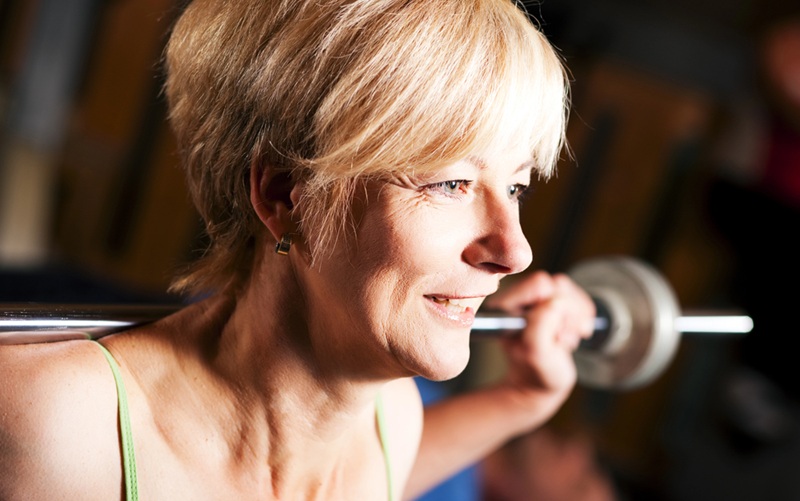
Recent science is painting a clearer, more urgent picture of why this renewed focus matters. A striking example: a study presented at The Menopause Society 2025 Annual Meeting in October found that muscle health, often overlooked during menopause, deteriorates measurably as estrogen declines, reinforcing the importance of early detection and intervention. This matters because loss of muscle mass (sarcopenia) affects mobility, metabolic health, bone strength, and long-term quality of life. Early, proactive interventions, from lifestyle and resistance training to potentially novel diagnostics or therapeutics, could shift the paradigm.
What’s more, the broader narrative around women’s health has grown more inclusive: beyond fertility and maternity, now midlife health, metabolic resilience, musculoskeletal longevity, and hormone-related aging are on the table. That reflects in wellness markets, clinical research pipelines, and employer policies alike.
Even with momentum building, progress is still far from comprehensive. In Canada, and globally, women’s health research remains chronically underfunded and narrowly defined. A Deloitte report revealed that women’s health receives only about 7% of national health research funding, largely concentrated in reproductive care. It also found that Canada ranks among the worst high-income nations in the women’s health gap, and that only 9% of medical school program descriptions even mention women’s health. Given these realities, it’s little surprise that women continue to experience the majority of drug-related adverse events.
This leaves vast areas of women’s lived health, including menopause, metabolic aging, musculoskeletal decline, neurological risk, autoimmune disease, and day-to-day quality-of-life outcomes, under-studied and under-supported. And this isn’t just a research gap; it’s a social equity problem. Too many women enter midlife and beyond without robust data, reliable diagnostics, or access to appropriately informed care. Too many are still told that fatigue, strength loss, mood shifts, and cardiovascular or bone health changes are simply “normal” and must be endured.
Compounding the problem, the education gap threatens to perpetuate outdated care: future healthcare providers are not being adequately trained to recognize, evaluate, and treat women’s health needs across the lifespan. Until we fix that, the cycle continues.
Let’s be clear: 2025 laid the groundwork. 2026 must be the year we build on it.
First, research must expand aggressively into midlife and aging-focused women’s health. Think muscle and metabolic health, bone density, cognitive aging, hormone decline, and autoimmune vulnerability. The science is starting to reveal patterns; now we need large, rigorous studies and real-world data.
Second, medical communication needs to shift. Health education has to evolve beyond reproductive cycles and maternity to treat women’s health as a lifelong journey. Medical affairs teams, femtech founders, and clinicians all must change how they talk, design materials, and scale support for women in their 40s, 50s, 60s and beyond.
Third, we need innovation in prevention, diagnostics, and management. Wearables, personalized screening schedules, AI-driven biomarkers, and digital health platforms that are tuned to women’s unique physiology. The realization that menopause isn’t just “end of fertility,” but a metabolic and systemic transition, opens an opportunity for meaningful interventions.
Finally, employers, payers and public-health systems must treat women’s midlife health as critical. Women are half the workforce, contribute across care roles, and deserve support during transitions that affect their productivity, mental health and quality of life. The economic and social benefits are real.

Even with renewed interest, progress remains far from comprehensive. In Canada, and worldwide, women’s health research is still vastly underfunded and narrowly scoped. A 2025 McKinsey Health Institute (MHI) report found that closing the women’s-health gap could unlock CAD $37 billion annually by 2040 for Canada alone.
At the same time, the global women’s-health market, encompassing therapeutics, diagnostics, and related innovation, was estimated at roughly US$49.3 billion in 2024, with forecasts projecting growth to more than US$68.5 billion by 2030, driven by rising demand for menopause care, metabolic-aging management, and women-focused treatments.
At Craft Science, we see this not only as a scientists’ or clinicians’ issue, but as a societal and economic opportunity. Because 2025 taught us something critical: women’s health is not a niche. It’s not a secondary market. It’s the core of population health, aging resilience, workforce sustainability, and frankly, humanity.
We’re excited about this shift. But excitement isn’t enough. The path forward demands collaboration, from researchers, communicators, clinicians, marketers, and innovators coming together with empathy, purpose, and scientific rigor.
To all the women, advocates, partners and skeptics, 2026 should be the year we stop apologizing for asking questions and start demanding answers. Because female health isn’t a “special interest.” It’s universal.