
October 21, 2026
For years, going all the way back to graduate school, I have made some version of the same observation: ask someone (not studying science) to name a Nobel laureate and explain the discovery that won the prize, and most people will struggle. Ask what a celebrity wore, who they are dating, what they eat, what products they use or what they posted yesterday, and the odds improve considerably.
I have taken a few joking jabs at the Kardashians over the years, but the barbs were never really directed at them so much as at us and what we choose to pay attention to. What we watch, and what we reward with visibility, tells us about the things we value. Fame has become an enormously powerful currency. It can sell cosmetics, diets, supplements, clothing, medical treatments and almost anything else that can be placed in front of an audience. It doesn’t take long for familiarity to be mistaken for authority, even when there is no real expertise behind it.
Meanwhile, scientists will spend decades uncovering the biology of a disease. Physicians transform how we treat it. Researchers develop therapies that give people years of life they would not otherwise have had. Engineers, nurses, inventors and public health teams quietly solve problems affecting millions of people. These people won’t make millions, and few ever profit off their findings. Most of us will never even know their names. For example, AIDS, once a death sentence, is now a manageable disease, with drugs that now not only suppress the virus to undetectable levels but also prevent transmission. Do you know the doctor whose team introduced this therapy that has saved millions of lives?
There is something backwards about that. Not because scientists and doctors need to be celebrities for celebrity’s sake. Most did not choose these careers because they wanted applause. But visibility tells us what a society values, and perhaps even more importantly, it tells our children.
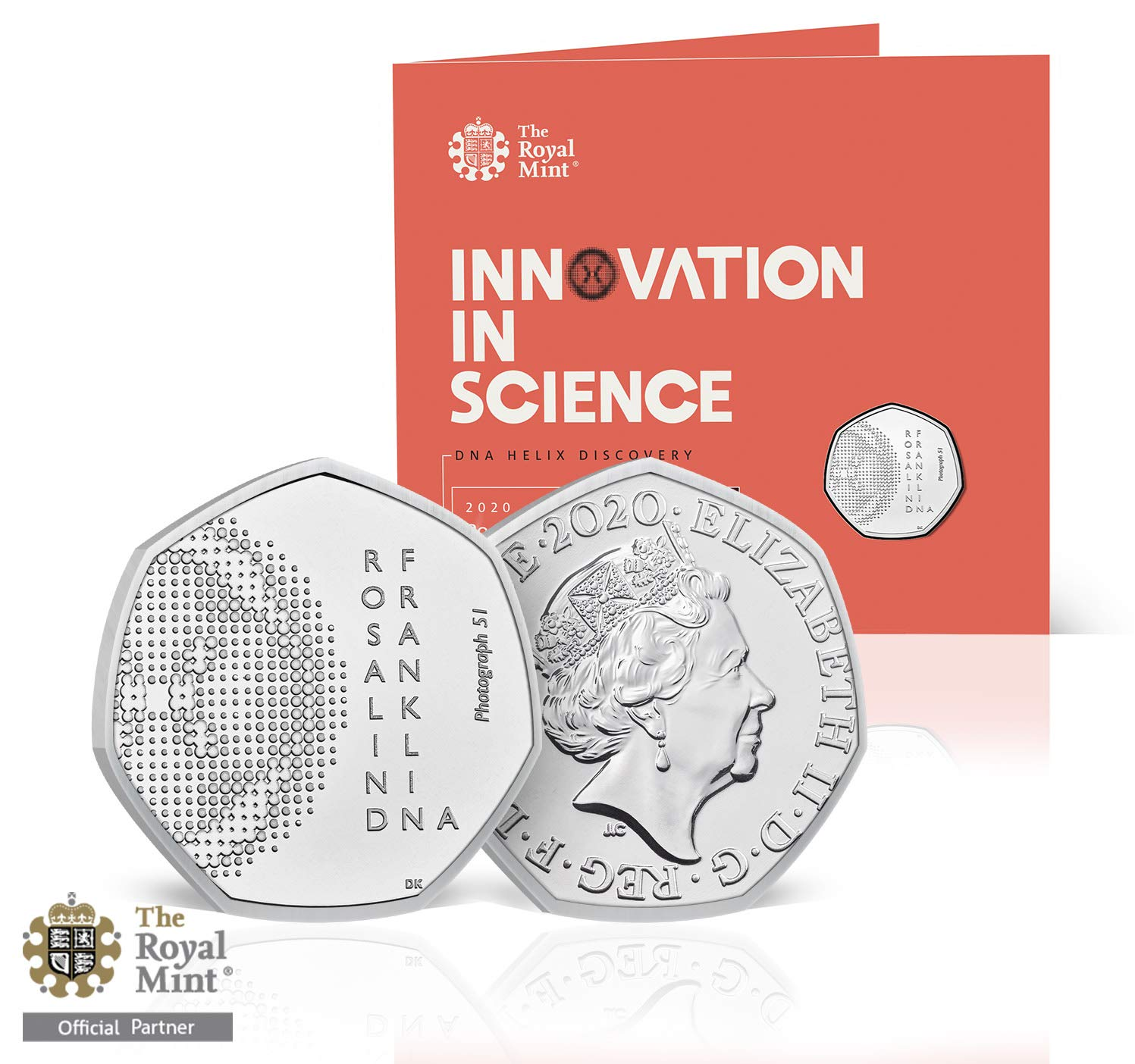
The UK’s Royal Mint has spent the past several years quietly making a version of this argument with its “Innovation in Science” coin series, putting Isaac Newton, Stephen Hawking and Alan Turing onto coins that pass through everyday pockets and tills, the same real estate normally reserved for monarchs and national symbols. It is a small gesture, and I am not suggesting a coin redesign solves the problem, but I love the idea behind it.
Why shouldn’t a child know who discovered a life-saving medicine? Why shouldn’t they recognize the scientist who transformed agriculture, developed a vaccine, advanced cancer treatment or helped us understand the universe? Why shouldn’t scientific achievement occupy some of the cultural space we devote so readily to fame?
Think about the people routinely presented to children as symbols of success: Athletes, actors, musicians, influencers and entrepreneurs are everywhere. There is nothing inherently wrong with admiring any of them. Culture, sport and entertainment have value. But science tends to enter a child’s life mainly as a school subject rather than as an exciting human endeavour carried out by people solving extraordinary problems right now.
We learn about Einstein and Marie Curie, and of course we should. But science did not stop with them. Somewhere today, somebody is working on the next treatment for Alzheimer’s disease. Someone is trying to understand why a cancer stops responding to therapy. Someone is studying a rare disease affecting only a few thousand people in the world. Someone is trying to regenerate damaged tissue, remove microplastics from our environment, save a species under threat, repair a broken spinal cord, prevent the next pandemic or solve a problem that most of us do not yet realize exists.
Those stories should be a visible part of our culture too.

We actually trust scientists more than the attention we give them would suggest.
The 2026 Edelman Trust Barometer found that 75% of Canadians trusted scientists to “do what is right,” making scientists considerably more trusted than journalists at 57%, government leaders at 47% or CEOs at 41%. Statistics Canada similarly reported that, in 2023, 68% of Canadians said they trusted scientific experts or peer-reviewed journals as sources of news or information.
In the United States, Pew Research Center found that in April 2020, 87% of adults had at least a fair amount of confidence in scientists to act in the public’s best interests. By 2023, that figure had fallen to 73%. It has since improved somewhat, reaching 77% in the latest survey, but it remains well below its earlier level.
Adding to this concern is where the public is getting its information. Statistics Canada reported this year that only 26.7% of Canadians typically used scientific experts or peer-reviewed journals as a source of news or information in 2025. More than twice as many, 54.3%, used social media platforms. Among Canadians aged 15 to 34, social media use as a source of news and information climbed to 78%.
But finding credible information on these platforms is becoming increasingly difficult. In the same Statistics Canada survey, four in five Canadians said they encountered information online that they suspected was misleading, false or inaccurate at least once a month. Nearly half, 47%, said distinguishing true from false information had become harder than it was three years earlier, while 61% said they were very or extremely concerned about online misinformation.
Those numbers should concern anyone who works in science or medicine.
Globally, the picture is more encouraging. A 2025 Nature Human Behaviour study involving more than 71,000 people across 68 countries found moderately high trust in scientists overall. Seventy-five percent agreed that scientific research methods are the best way to determine whether something is true or false. Importantly, 83% of respondents wanted scientists to engage more with society.
That last number is reassuring. It tells us the public does not want scientists to retreat into laboratories and journals: people want to hear from them directly. The challenge is to present information in ways that make it accessible, without sacrificing scientific credibility. To meet this demand, we are now seeing doctors and scientists taking to social media in an attempt to both enlighten and counteract misinformation. But on platforms where accurate and misleading content look much the same, how does their audience know who to trust?
People are being asked to make increasingly complicated decisions about their health and environment, while navigating an information ecosystem where expertise and popularity can look remarkably similar on a screen.
A physician carefully explaining the limitations of a study may be competing for attention with an influencer confidently declaring that a supplement “balances your hormones.” A scientist may spend fifteen years studying metabolism while someone with fifteen million followers offers a convincing but less-than-accurate explanation in thirty seconds. The most qualified person in the conversation is not necessarily the loudest, the most entertaining or the best promoted, and algorithms do not rank information according to scientific rigour.
This is why I think we need to reconsider what scientific literacy means.
We cannot expect people to distinguish strong evidence from weak evidence if we never teach them how evidence works. Things we learn in the sciences in university should enter mainstream education:
Once considered specialist skills reserved for people working in research, understanding the “scientific method” has become essential for living in a world saturated with health claims, wellness advice, miracle treatments and extraordinarily convincing misinformation.
We need to start teaching this in high school. Not simply memorizing the parts of a cell or the periodic table but understanding how science actually works: how we ask questions, test ideas, challenge findings and gradually build confidence in what we know. And it shouldn’t be reserved for only those who take science classes. Taught alongside how to understand and recognize rhetoric, these become core literacy skills in our increasingly online world: the ability to question what is presented as “fact”, ask what evidence supports it, and recognize when persuasion and rhetorical techniques are standing in for proof.
But teaching about the scientific method also includes teaching its limitations.
Peer review is not perfect. Science is not infallible. Individual scientists can be wrong, studies can be poorly designed and even long-held ideas can eventually be overturned. If we don’t incorporate the realities of how research is conducted, it can appear that science is unreliable, and that’s simply not the case. A true understanding of the scientific method means recognizing that its findings are not immutable. Its foundation, rests on the fact that we can challenge, test, correct and refine what we believe to be true, and this is one of its greatest strengths.

We also cannot simply tell people to “look at the evidence” if the evidence is inaccessible, unreadable or buried behind a paywall or beneath a mountain of more engaging content.
Credible science has to be accessible.
That means scientists communicating their own work more often and more effectively, with institutions supporting them in that effort. Universities, hospitals and research institutions need to treat public communication of scientific accomplishments as a core part of their mission. This work should start in the classroom, with credit-bearing courses in knowledge translation for science students, and minors in health and science communication for journalism students.
Journalists, in turn, need access to experts who can explain complicated findings without stripping away the nuance. And all of these efforts need to reach beyond traditional outlets, meeting people where they are, including on the platforms where misinformation thrives.
This is the heart of the work we do at Craft Science. The scientists, physicians and research teams we work with can explain their findings brilliantly to other experts. We help them translate that same work into different forms targeted to the audiences who actually need it: regulators, clinicians, journalists, and patients. And we do it without stripping out the key elements that keep it trustworthy. That is what Craft Science is built on: people who know the science and know how to communicate it effectively, making scientific and medical knowledge accessible without compromising its integrity.
Clarity should come from a deeper understanding of the science, not from smoothing over its complexities. Scientific communication shouldn’t have to sacrifice rigour to compete on TikTok, Instagram, YouTube or whatever platform comes next. We need to get better at how we reach people on these platforms, without lowering standards.
Peer-reviewed evidence should be interesting. Credible experts should become recognizable. We should strive to ensure people know how to identify trustworthy health information and where to find it, before they urgently need it.
Put scientists on coins, on billboards, and in classrooms. Feature them in documentaries. Invite them onto popular podcasts. Celebrate major discoveries beyond the day the press release is issued. Give young people contemporary scientific role models rather than stopping the story of science a century ago with Einstein and Curie. Let’s highlight the graduate students doing the basic research that makes breakthroughs possible. Show children that discovering something nobody has ever known before is exciting. Show them that spending a life trying to understand disease, care for people or solve difficult problems is something society values.
The goal is not to replace one kind of celebrity with another. It is to broaden our definition of who deserves attention.
We spend enormous amounts of cultural energy deciding who gets seen. Attention shapes aspiration and trust. Over time, it shapes what people believe is worth pursuing and whose voice they consider worth listening to. Science and medicine deserve a much larger share of it.
The people doing this work are among the unsung heroes of our time. And a society that understands science, values evidence and knows how to find credible information, is better equipped to make decisions about its health, its environment, its future and the challenges it will inevitably face.
Science cannot change the world if it remains invisible to it.
P.S.: That scientist who pioneered the HIV treatments that have saved millions of lives? Dr. Julio Montaner. You can read more about his accomplishments here.