
June 30, 2026

In the fall of 1960, a newly hired pharmacologist named Frances Kelsey received her first assignment at the FDA: review a drug called Kevadon [1]. It was, by all appearances, a routine case. The drug was already sold across Europe and Canada, prescribed to pregnant women to ease morning sickness. The manufacturer’s application was thick with reassuring anecdotes from physicians. The drug seemed safe. Everybody said so.
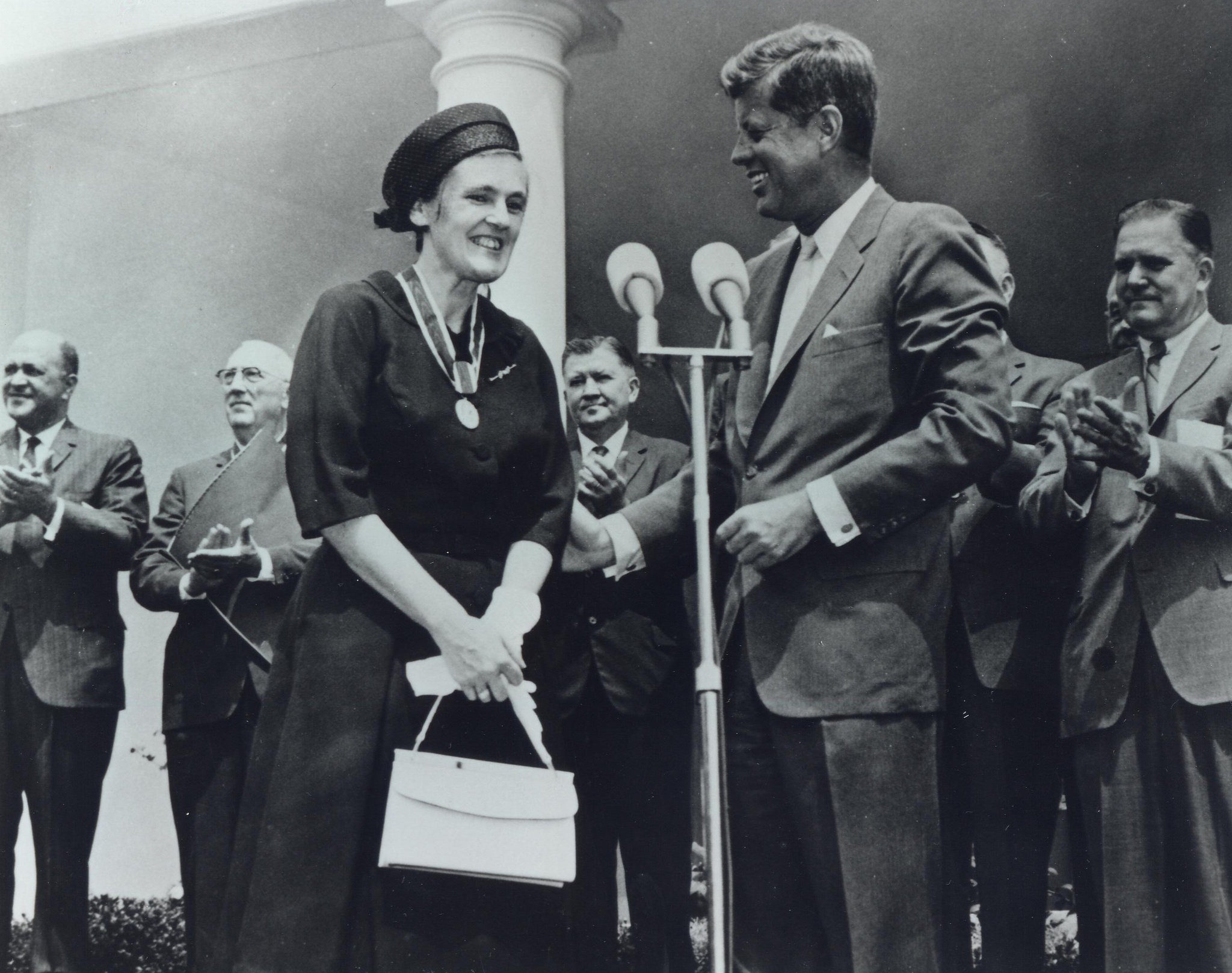
Frances O. Kelsey receives the President’s Award for Distinguished Federal Civilian Service from President John F. Kennedy, 1962 National Library of Medicine, Images from the History of Medicine, A018057
Kelsey was unconvinced. The science, in her view, just wasn’t there. It offered only practitioner testimony, with no controlled, reproducible, or mechanistic proof. She kept asking for more data, resetting the FDA’s 60-day review clock each time. The manufacturer pushed back hard. She held firm.
Eighteen months later, after the drug had been marketed in dozens of countries, researchers in Germany and Australia linked Kevadon/thalidomide to catastrophic birth defects in thousands of children worldwide. The United States had been largely spared. Kelsey, a Canadian-born pharmacologist who had earned her PhD at the University of Chicago, was awarded the President’s Award for Distinguished Federal Civilian Service by John F. Kennedy in 1962 [2]. Her story helped drive the Kefauver-Harris Amendments into law, requiring manufacturers to demonstrate both safety and efficacy before receiving market authorization [3]. The modern efficacy-based drug approval era was born.
What is less often noted is that Kelsey was also, in a sense, a pioneer of real-world evidence (RWE) thinking. Her concern wasn’t that the thalidomide data was observational. It was that the observational data was poorly documented, methodologically weak, and never designed to catch the most important critical signals. She understood that evidence was measured in scientific rigor, not page counts. Sixty years later, the rigorous evidentiary bar she helped set for market entry is now being applied to what happens long after a drug crosses it.
And Canada, the country that produced her, is once again at the table.
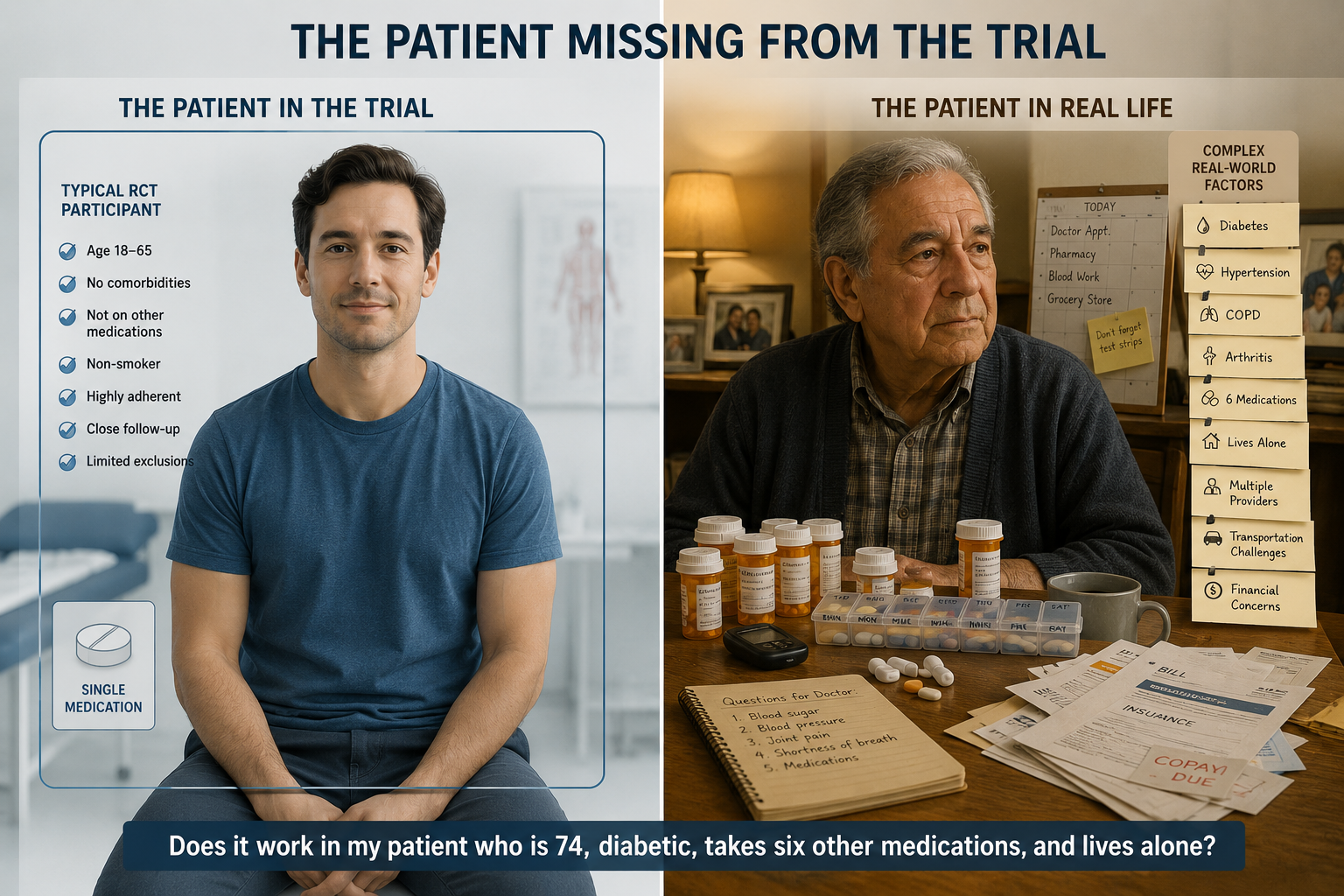
The randomized controlled trial (RCT) is a beautiful instrument. Its logic is elegant: randomly assign patients to treatment or control, hold everything else constant, and the signal, if it exists, will emerge. The RCT gave medicine its epistemological backbone.
But here is what it cannot do: it cannot tell you what happens when your drug meets the full, ungovernable complexity of the real world.
RCTs enroll carefully selected populations. They often exclude the elderly, the pregnant, the comorbid, the complex, the noncompliant. They run for months, sometimes years, but rarely for the decade-long arc of a chronic disease. They answer the question ‘Does this drug work under ideal conditions?’ They cannot answer: Does it work in my patient who is 74, diabetic, takes six other medications, and lives alone?
As the Council for International Organizations of Medical Sciences (CIOMS) Working Group XIII noted in 2025, many research questions are simply not amenable to randomization: the study of rare adverse effects, long-term outcomes, treatment of rare diseases, and the behavior of drugs in populations deliberately excluded from pivotal trials [4]. The evidence that approves a drug and the evidence that governs its clinical use have always inhabited different worlds.
This gap between the pristine conditions of the trial and the messy reality of clinical practice, is a structural feature of how drugs are developed and deployed. It is this gap that RWE was designed to close.

The RWE that we know today was born out of pharmacovigilance.
The FDA has always used observational data: claims records, registries, electronic health records, and spontaneous adverse event reports to monitor the safety of approved drugs post-market. The Sentinel System, launched by the FDA in 2008, formalized this approach at scale: a public-private network drawing on electronic health records and claims data from dozens of health systems, allowing the agency to systematically evaluate the safety of approved products in populations numbering in the tens of millions [5].
But it was still, fundamentally, a safety tool. The idea that this kind of data might support effectiveness claims, that it might sit alongside the RCT as a co-equal source of regulatory evidence, was a different proposition entirely. That proposition arrived in 2016.
On December 13, 2016, the 21st Century Cures Act mandated that the FDA establish a framework for evaluating the use of RWE to support approval of new drug indications and to satisfy post-approval study requirements. The FDA published that framework in 2018 [6]. Medical affairs, Health economics and outcomes research (HEOR), and pharmacoepidemiology teams began investing in real-world data capabilities. The evidence landscape was bifurcating.

Navigating PAAB isn’t just about checking boxes. It requires deep familiarity with an evolving regulatory framework that intersects federal law, Health Canada policy, and PAAB’s own Code
In April 2023, Canada’s Drug Agency (CDA-AMC) and Health Canada did something quietly significant: they jointly published the first submission-ready Canadian guidance for reporting RWE [7]. The guidance was designed to ensure that regulators and health technology assessment (HTA) agencies, including INESSS in Quebec, had sufficient information to evaluate RWE studies for appropriateness in decision-making. Core reporting standards were aligned with global frameworks. Transparency and reproducibility were central requirements [8].
This was not a passive harmonization exercise. Health Canada co-chaired the national RWE Steering Committee that produced the guidance, alongside CDA-AMC, provincial health agencies, patient organizations, industry, and academia. Canada was actively shaping the standards its own submissions would be judged against on the world stage.
The 2025-26 Health Canada Departmental Plan made the direction of travel explicit: the department committed to working with domestic and international partners to advance learning, harmonize best practices, and develop international guidance on real-world evidence and data [9]. Meanwhile, Canada is implementing ICH E6(R3) – the good clinical practice guideline that formally acknowledges pragmatic trials, registry-based studies, and real-world data in clinical research – in April 2026, following adoption by EMA in July 2025 and FDA in September 2025 [10,11]. Notably, Canada is the first country to write a single RWE guidance document that applies to both drug approvals and reimbursement decisions.
For pharma companies operating in Canada, this convergence matters. The regulatory and HTA evidence bar for RWE is now codified, consistent, and connected to international standards. A study designed to meet those standards is more likely to be legible to regulators and HTA bodies on both sides of the border. The days of generating Canadian-specific evidence as an afterthought are over.
The frameworks that govern how RWE is generated, evaluated, and submitted are no longer hypothetical. Between December 2025 and March 2026, the FDA, EMA, and Health Canada collectively changed what counts as adequate evidence, who can produce it, and what happens to it once it exists. The next article in this 2-part series maps that timeline in detail and translates how operationalizing RWE has dramatically expanded the mandate of medical affairs teams. Discover how these new regulations have shifted RWE from a post-approval safety tool to a credible input for label expansions, market access, and regulatory submissions in Part 2.
References
[1] Frances Oldham Kelsey: Medical reviewer famous for averting a public health tragedy | FDA, (n.d.). https://www.fda.gov/about-fda/fda-history-exhibits/frances-oldham-kelsey-medical-reviewer-famous-averting-public-health-tragedy
[2] Frances Oldham Kelsey, PhD’38, MD’50, FDA scientist who spurred drug reform, 1914-2015 | University of Chicago News, (n.d.). https://news.uchicago.edu/story/frances-oldham-kelsey-phd38-md50-fda-scientist-who-spurred-drug-reform-1914-2015
[3] C.K. Warsh, Frances Oldham Kelsey, the FDA, and the battle against thalidomide, (2024). ISBN-13: 979-8212531825
[4] S. Hennessy, Y. Atsuta, S. Hill, L. Rägo, J. Juhaeri, A. Enrica, A. Yoshiko, A. Elodie, A. Laurent, B.A. Elodie, B. Stella, B. Mariette, B. Thomas, C. Ulka, C. Gracy, G. Wim, G.C. Andres, G.R. Elisa, H. Britta, H. Sean, H. Steffen, H. Sanna, I. Alar, I. Akihiro, I. Solomon, J.F. Michele, J. Juhaeri, J. Moriya, L. Laurie, L. Jie, D.L. Cynthia, M. Andrea, M. Miguel-Angel, M. Robertino, N. Kinue, N. Manami, N. Takahiro, R. Lembit, R. Heather, S. Daisaku, S. Anja, S. David, S. Monica, S. Julia, T. David, W. Rika, W. Shirley, W. Julia, W. David, Z. Kristina, Real-World Data and Real-World Evidence in Regulatory Decision Making: Report Summary From the Council for International Organizations of Medical Sciences (CIOMS) Working Group XIII, Pharmacoepidemiol. Drug Saf. 34 (2025) e70117. https://doi.org/10.1002/PDS.70117.
[5] Real-World Evidence | FDA, (n.d.). https://www.fda.gov/science-research/science-and-research-special-topics/real-world-evidence
[6] Federal Register :: Framework for a Real-World Evidence Program; Availability, (n.d.). https://www.federalregister.gov/documents/2018/12/07/2018-26546/framework-for-a-real-world-evidence-program-availability
[7] Guidance for Reporting Real-World Evidence | CDA-AMC, (n.d.). https://www.cda-amc.ca/guidance-reporting-real-world-evidence
[8] Health Canada’s position on the CADTH Guidance for Reporting RWE to Support Decision-making – Canada.ca, (n.d.). https://www.canada.ca/en/health-canada/services/drugs-health-products/drug-products/announcements/health-canada-position-guidance-reporting-real-world-evidence-supporting-decision-making.html
[9] Health Canada 2025-26 Departmental Plan – Canada.ca, (n.d.). https://www.canada.ca/en/health-canada/corporate/transparency/corporate-management-reporting/report-plans-priorities/2025-2026-departmental-plan.html#a2.2.6.1.2
[10] M14 General Principles on Planning, Designing, Analyzing, and Reporting of Non-interventional Studies That Utilize Real-World Data for Safety Assessment of Medicines | FDA, (n.d.). https://www.fda.gov/regulatory-information/search-fda-guidance-documents/m14-general-principles-planning-designing-analyzing-and-reporting-non-interventional-studies-utilize
[11] ICH M14 guideline on general principles on plan, design and analysis of pharmacoepidemiological studies that utilize real-world data for safety assessment of medicines – Scientific guideline | European Medicines Agency (EMA), (n.d.). https://www.ema.europa.eu/en/ich-m14-guideline-general-principles-plan-design-analysis-pharmacoepidemiological-studies-utilize-real-world-data-safety-assessment-medicines-scientific-guideline